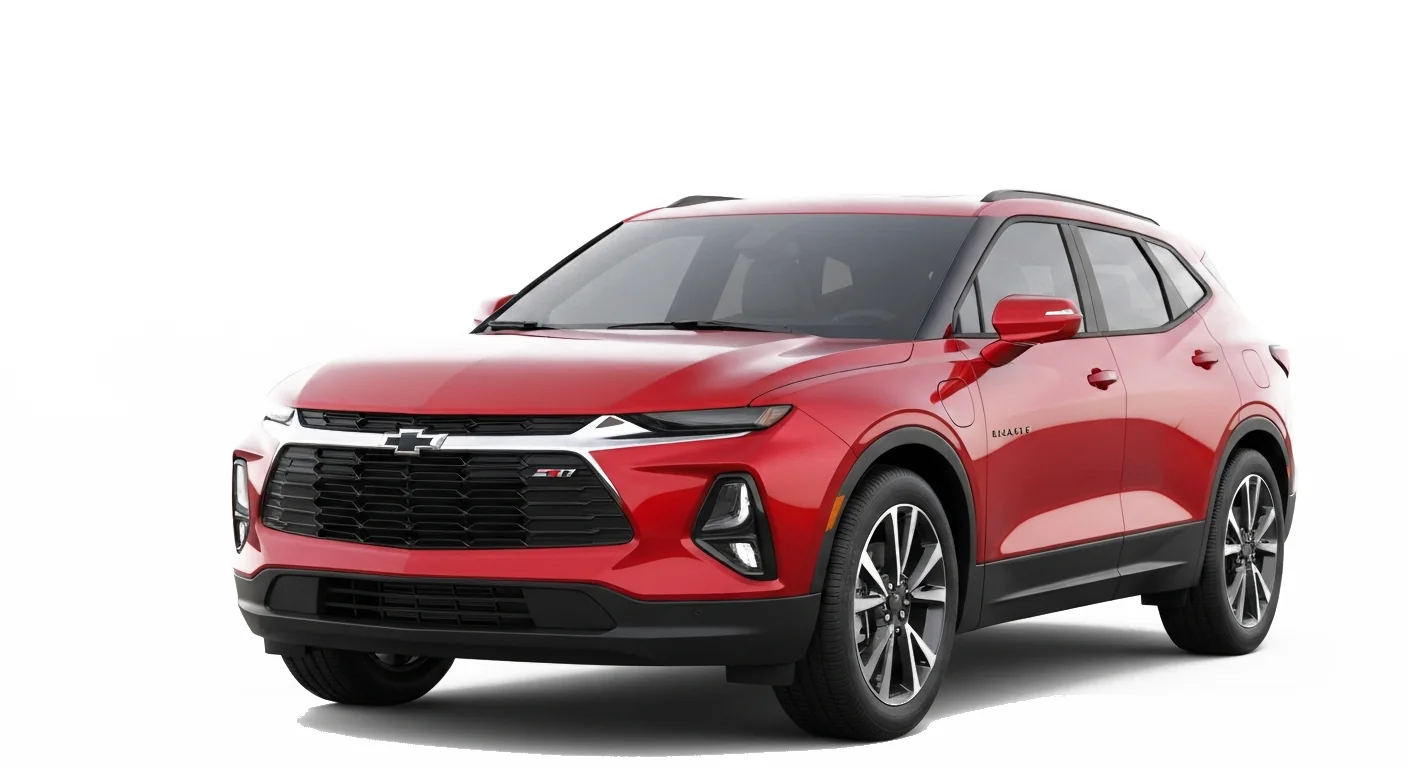
The 2026 Chevrolet Blazer EV is a battery-electric SUV with AWD and seating for 5. It belongs to the Gen 1 generation. The SS AWD is the version described here, and the figures below refer to that configuration unless noted otherwise.
Performance
The featured SS AWD version develops 595 hp and 880 Nm (649 lb-ft) of torque. Its listed 0-100 km/h time is 3.5 seconds, which is seriously quick. Top speed is listed at 200 km/h (124 mph). Its power output is about 67% above the peer average. Its 0-100 km/h time is about 41% quicker than the peer average. The figures establish its straight-line performance on paper, but they do not substitute for measured braking, handling or ride-quality tests.
Battery, range and charging
Battery capacity is listed at 102.0 kWh. The recorded electric range is 440 km (273 miles). Listed energy or fuel consumption is 23.2 kWh/100km. Maximum DC charging power is 190 kW. Its listed range is about 12% below the peer average. Real-world range and charging speed still depend on temperature, speed, wheel choice, battery state and the conditions of the test cycle.
Dimensions and practicality
Its exterior dimensions are 4,883 mm (192.2 in) in length, 1,953 mm (76.9 in) in width, and 1,681 mm (66.2 in) in height, while the wheelbase measures 2,954 mm (116.3 in). Cargo capacity is listed at 863 litres (30.5 cu ft), expanding to 1,705 litres (60.2 cu ft) with the rear seats folded. The cabin is configured for 5 occupants. Listed curb weight is 2,560 kg (5,644 lb). The recorded braked towing capacity is 1,588 kg (3,501 lb). That cargo volume is about 57% above the peer average. The measurements are useful for comparison, although seat comfort, access and the shape of the load area still need to be judged in person.
In perspective
Compared with nearby battery-electric SUV models from the same period, the 2026 Chevrolet Blazer EV is strongest on power and cargo capacity, while price and range stand out as the principal numerical compromise. That conclusion is drawn from the recorded specifications rather than a road test. A final choice should also account for local pricing, equipment, comfort and a test drive.
Prepared by CarsbySpec. Peer context: 2025-2027 battery-electric SUVs in the CarsbySpec database. This page is built from the structured specifications displayed here; missing values are not estimated. Read the methodology.