Home / BMW / i7 / 2025
BMW

2025 BMW i7

Electric Sedan · M70 · G70
Selected version M70 G70 · Exact specifications shown below
Compare all 2 versions
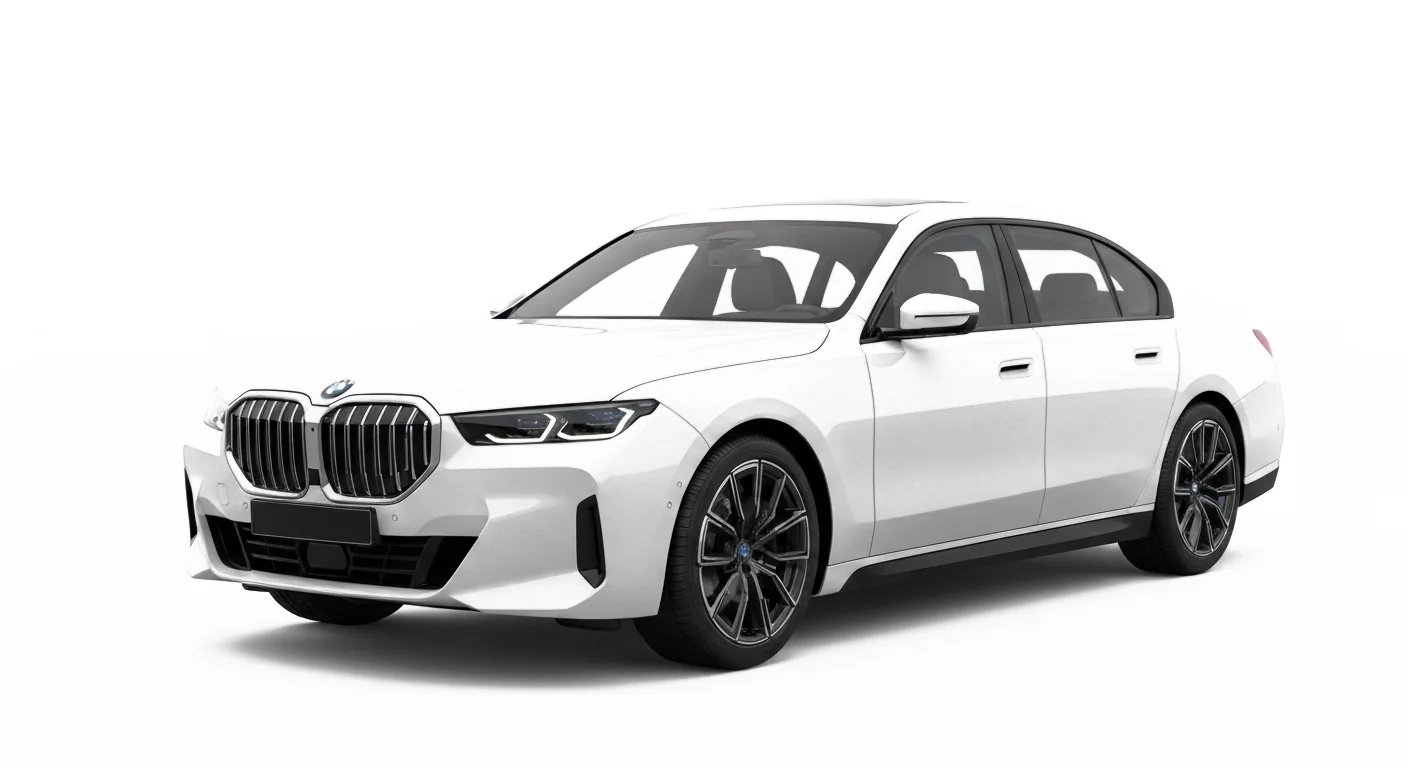
2025 BMW i7 M70 studio car image
560
km
Range
3.7
s
0-100
660
hp
Power
1,100
Nm
Torque
250
km/h
Top speed
Compare
CarsbySpec review Is the 2025 BMW i7 the best choice?

See its rating, value-for-money position, known-problem research and closest rivals.

Read the full review

The 2025 BMW i7 is a battery-electric sedan with AWD and seating for 5. It belongs to the G70 generation. The M70 is the version described here, and the figures below refer to that configuration unless noted otherwise.

Performance

The featured M70 version develops 660 hp and 1,100 Nm (811 lb-ft) of torque. Its listed 0-100 km/h time is 3.7 seconds, which is seriously quick. Top speed is listed at 250 km/h (155 mph). Its power output is about 32% above the peer average. Its 0-100 km/h time is about 21% quicker than the peer average. The figures establish its straight-line performance on paper, but they do not substitute for measured braking, handling or ride-quality tests.

Battery, range and charging

Battery capacity is listed at 105.7 kWh. The recorded electric range is 560 km (348 miles). Listed energy or fuel consumption is 21.2 kWh/100km. Maximum DC charging power is 195 kW. Its listed range is about 5% below the peer average. Real-world range and charging speed still depend on temperature, speed, wheel choice, battery state and the conditions of the test cycle.

Dimensions and practicality

Its exterior dimensions are 5,391 mm (212.2 in) in length, 1,950 mm (76.8 in) in width, and 1,544 mm (60.8 in) in height, while the wheelbase measures 3,215 mm (126.6 in). Cargo capacity is listed at 500 litres (17.7 cu ft). The cabin is configured for 5 occupants. Listed curb weight is 2,710 kg (5,975 lb). That cargo volume is about 5% above the peer average. The measurements are useful for comparison, although seat comfort, access and the shape of the load area still need to be judged in person.

The model range

The recorded line-up consists of xDrive60 and M70. Across the range, the specifications span 544 hp to 660 hp, 3.7 s to 4.7 s, and 560 km to 625 km, while listed starting prices run from $106,700-$169,500. Drivetrain, battery or engine choice, wheels and market equipment can all change the final figures, so the version table should be used when choosing between them.

In perspective

Compared with nearby battery-electric sedan models from the same period, the 2025 BMW i7 is strongest on power and acceleration, while price stands out as the principal numerical compromise. That conclusion is drawn from the recorded specifications rather than a road test. A final choice should also account for local pricing, equipment, comfort and a test drive.

Prepared by CarsbySpec. Peer context: 2024-2026 battery-electric sedans in the CarsbySpec database. This page is built from the structured specifications displayed here; missing values are not estimated. Read the methodology.
BMW i7 2025 versions compared

Select a row for exact data
Version Generation 0-100 Range Power Top speed Price Open version
xDrive60 G70 4.7 s 625 km 544 hp 240 km/h $106,700 View specs
M70Selected G70 3.7 s 560 km 660 hp 250 km/h $169,500 Viewing

2025 BMW i7 questions answered

How fast is the 2025 BMW i7 from 0-100 km/h?

2025 BMW i7 M70 is listed at 3.7 seconds from 0-100 km/h. Acceleration can differ by trim, market and test conditions.

What is the top speed of the 2025 BMW i7?

The featured specification has a listed top speed of 250 km/h, approximately 155 mph.

How much horsepower does the 2025 BMW i7 have?

2025 BMW i7 M70 is listed at 660 hp. Other 2025 trims may use a different engine, motor or power output.

How much torque does the 2025 BMW i7 have?

The featured specification is listed at 1,100 Nm, approximately 811 lb-ft of torque.

What is the range of the 2025 BMW i7?

The featured specification lists 560 km, approximately 348 miles, of electric range. Real-world distance varies with speed, temperature, wheels, load and test cycle.

What battery size does the 2025 BMW i7 have?

The featured 2025 BMW i7 specification has a listed battery capacity of 105.7 kWh.

How fast can the 2025 BMW i7 charge?

The listed maximum DC charging power is 195 kW. Actual charging speed depends on battery temperature, state of charge and charger conditions.

What is the fuel economy or energy consumption of the 2025 BMW i7?

The featured specification records 21.2 kWh/100km. Use the same test cycle and unit when comparing it with another car.

What are the dimensions of the 2025 BMW i7?

The featured specification is 5,391 mm (212.2 in) long, 1,950 mm (76.8 in) wide, 1,544 mm (60.8 in) tall, and a 3,215 mm wheelbase. Dimensions can vary slightly with trim, wheels and market equipment.

How much cargo or boot space does the 2025 BMW i7 have?

The listed cargo capacity is 500 litres, approximately 17.7 cubic feet.

How much does the 2025 BMW i7 weigh?

The featured specification has a listed curb weight of 2,710 kg, approximately 5,975 lb. Equipment can change the final vehicle weight.

How many seats does the 2025 BMW i7 have?

The featured 2025 BMW i7 specification is listed with 5 seats.

How much does the 2025 BMW i7 cost?

The recorded starting MSRP for the featured specification is $169,500 USD. Pricing, taxes and equipment vary by country and model year.

What fuel type and drivetrain does the 2025 BMW i7 use?

The featured entry is classified as a battery-electric sedan with AWD. Powertrain availability can vary by country and trim.

Are these 2025 BMW i7 specifications based on a road test?

No. This is the model-year specification reference. The separate CarsbySpec review scores the car against comparable models, while neither page claims first-hand driving impressions unless an actual road test is explicitly documented.

What safety rating does the 2025 BMW i7 have?

CarsbySpec does not yet hold a verified independent crash-test result matching this exact model year, generation and market. The car may be untested, tested under another name or specification, or still awaiting source review. Missing data is not treated as a zero score.