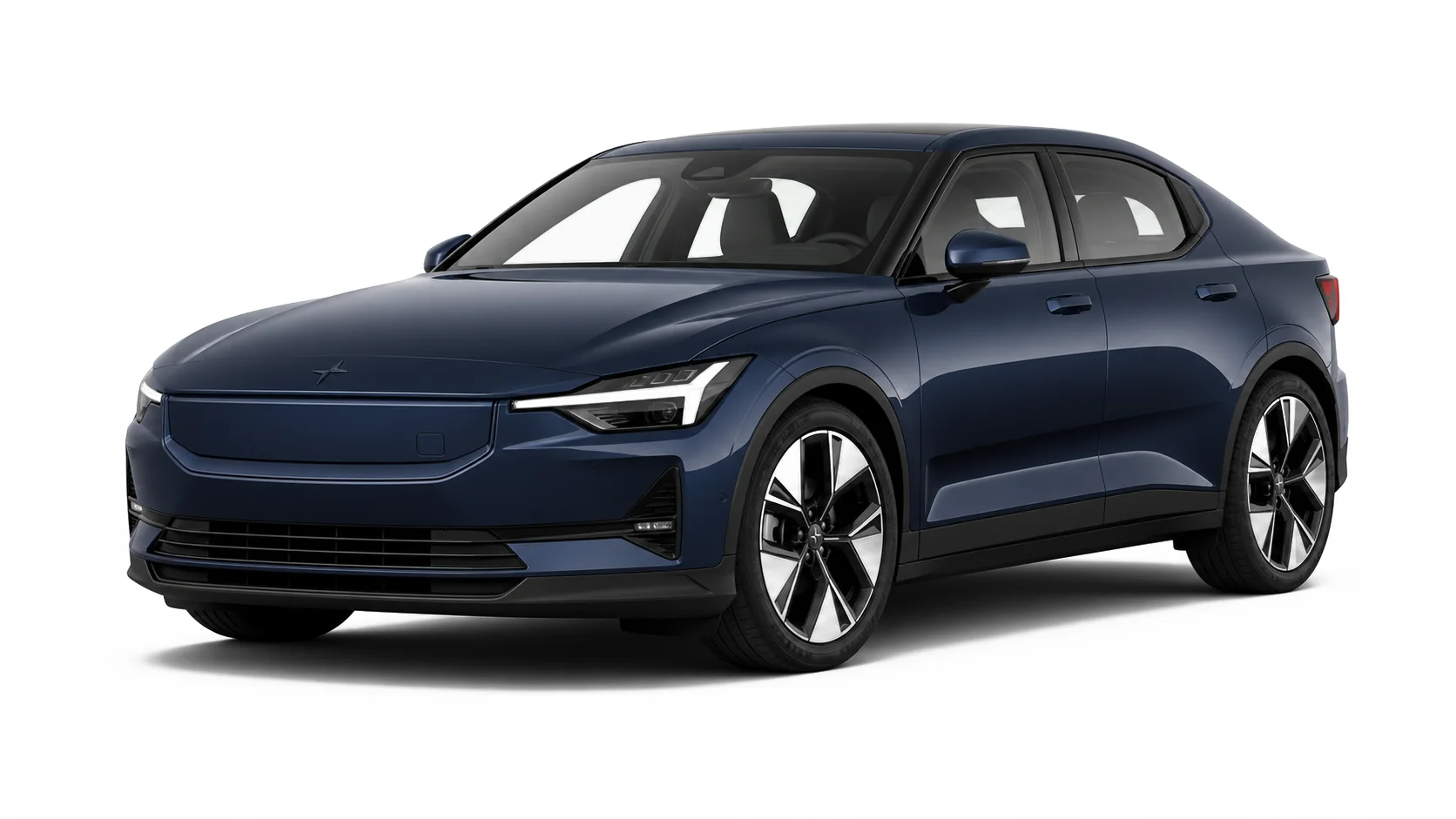
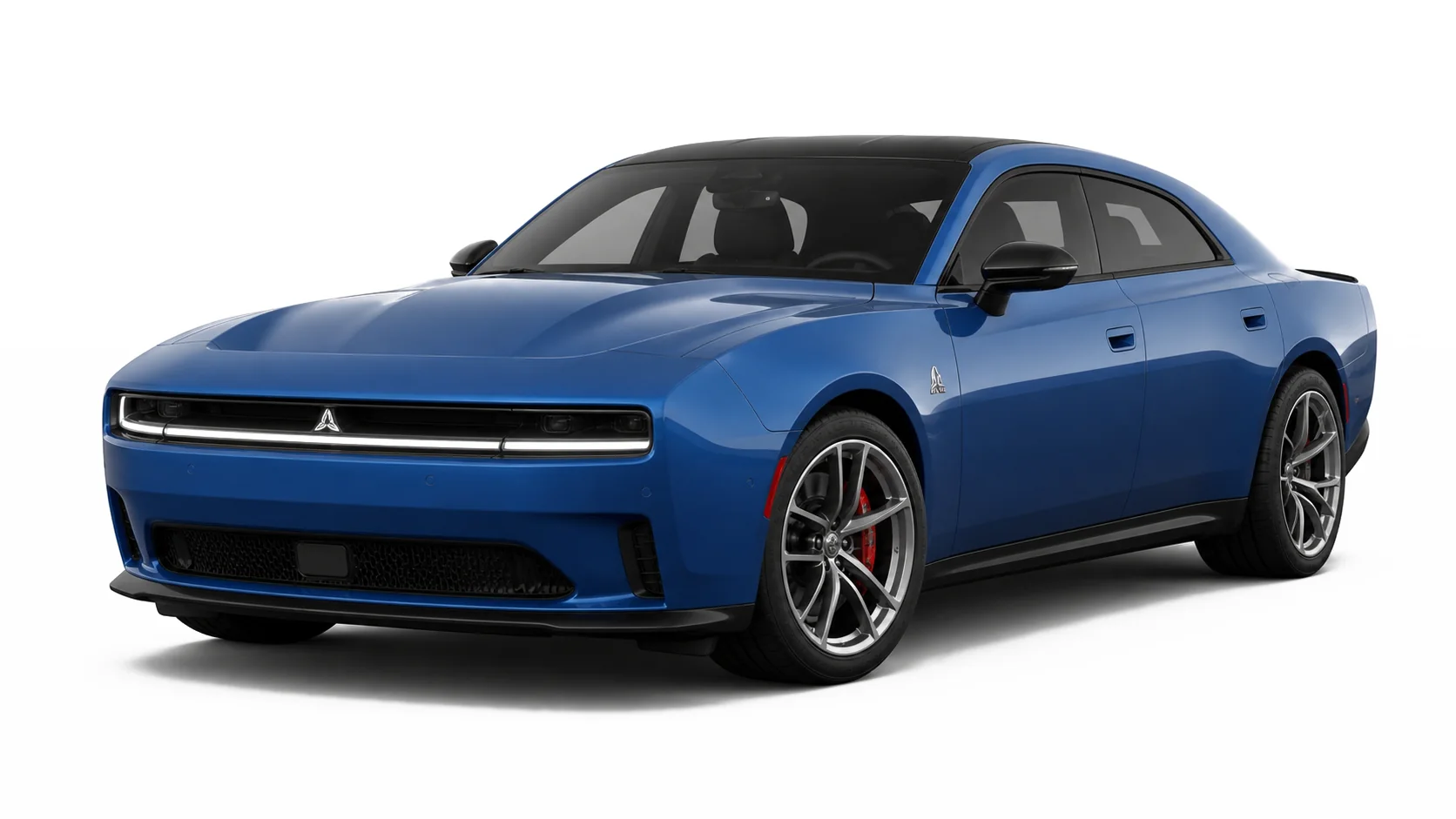
Polestar 2 Long Range Single Motor vs Dodge Charger Daytona Scat Pack

Comparison winners

5 metrics
0-100 winner Dodge Charger Daytona Scat Pack 3.3 s Runner-up: 6.2 s
Range winner Polestar 2 Long Range Single Motor 655 km Runner-up: 397 km
Power winner Dodge Charger Daytona Scat Pack 670 hp Runner-up: 299 hp
Cargo winner Dodge Charger Daytona Scat Pack 481 L Runner-up: 405 L
Price winner Polestar 2 Long Range Single Motor $48,400 Runner-up: $73,115

How the specs compare

This comparison sets the 2026 Polestar 2 Long Range Single Motor against the 2026 Dodge Charger Daytona Scat Pack. Both belong to the sedan class, so their dimensions, performance and utility figures address a broadly similar type of car. Both use battery-electric powertrains, allowing a relatively direct comparison of the recorded energy figures.

Performance, power and 0-100 km/h

2026 Dodge Charger Daytona Scat Pack has the quicker recorded 0-100 km/h time at 3.3 seconds, compared with 6.2 seconds for 2026 Polestar 2 Long Range Single Motor. 2026 Dodge Charger Daytona Scat Pack has the higher listed output at 670 hp; 2026 Polestar 2 Long Range Single Motor is rated at 299 hp, a difference of 371 hp. The torque figures follow 2026 Dodge Charger Daytona Scat Pack at 868 Nm and 2026 Polestar 2 Long Range Single Motor at 490 Nm. These figures describe straight-line potential only; they do not establish braking performance, ride quality, steering response or durability under repeated hard use.

Range, battery, charging and efficiency

2026 Polestar 2 Long Range Single Motor carries the longer listed range at 655 km, against 397 km for 2026 Dodge Charger Daytona Scat Pack. 2026 Polestar 2 Long Range Single Motor has the lower recorded consumption at 14.5 kWh/100km; 2026 Dodge Charger Daytona Scat Pack is listed at 25.3 kWh/100km. 2026 Polestar 2 Long Range Single Motor has the higher listed DC charging ceiling at 205 kW, compared with 150 kW. Test cycle, temperature, wheel size and charging conditions can materially affect these results, so only figures measured on the same basis should be treated as directly comparable.

Dimensions, cargo space and towing

2026 Dodge Charger Daytona Scat Pack provides the larger quoted cargo volume: 481 litres versus 405 litres, a difference of 76 litres. 2026 Dodge Charger Daytona Scat Pack is 454 mm longer overall. Exterior size is not a benefit by itself: a longer body may create useful room, but cargo shape, rear-seat space and ease of parking still require a physical inspection.

Price and overall assessment

2026 Polestar 2 Long Range Single Motor has the lower listed starting price at $48,400, compared with $73,115 for 2026 Dodge Charger Daytona Scat Pack. 2026 Dodge Charger Daytona Scat Pack leads in more of the shared headline fields, but that is not a universal verdict: a buyer should weight price, performance, range and utility rather than simply count category wins. The assessment is based on the specifications shown here; it is not presented as a two-car road test.

Prepared by CarsbySpec from the structured specifications displayed on this page. Missing values are not estimated, and component figures are not treated as directly comparable system figures. Read the methodology.

Specification Polestar 2 Long Range Single Motor2026 Dodge Charger Daytona Scat Pack2026
Performance
0-100 km/h6.2 s3.3 s
Top Speed205 km/h220 km/h
Power299 hp670 hp
Torque490 Nm868 Nm
Range & Efficiency
Range655 km397 km
Battery82 kWh100.5 kWh
Efficiency14.5 kWh/100km25.3 kWh/100km
CO2 Emissions0 g/km0 g/km
DC Charging205 kW150 kW
Size & Capacity
Length4,606 mm5,060 mm
Ground Clearance151 mm132 mm
Cargo405 L481 L
Curb Weight2,010 kg2,435 kg
Towing1,500 kg
Seats55
Turning Circle11.5 m12.2 m
Starting MSRP$48,400$73,115

Polestar 2 Long Range Single Motor vs Dodge Charger Daytona Scat Pack questions answered

Which is faster, the 2026 Polestar 2 Long Range Single Motor or the 2026 Dodge Charger Daytona Scat Pack?

2026 Dodge Charger Daytona Scat Pack is quicker from 0-100 km/h at 3.3 seconds, versus 6.2 seconds for 2026 Polestar 2 Long Range Single Motor.

Which has the higher top speed, the 2026 Polestar 2 Long Range Single Motor or the 2026 Dodge Charger Daytona Scat Pack?

2026 Dodge Charger Daytona Scat Pack has the higher listed top speed at 220 km/h (137 mph), compared with 205 km/h (127 mph).

Which has more horsepower, the 2026 Polestar 2 Long Range Single Motor or the 2026 Dodge Charger Daytona Scat Pack?

2026 Dodge Charger Daytona Scat Pack has more power at 670 hp, a 371 hp advantage over 2026 Polestar 2 Long Range Single Motor.

Which has more range, the 2026 Polestar 2 Long Range Single Motor or the 2026 Dodge Charger Daytona Scat Pack?

2026 Polestar 2 Long Range Single Motor has the longer listed range at 655 km (407 miles), versus 397 km (247 miles).

Which has the larger battery, the 2026 Polestar 2 Long Range Single Motor or the 2026 Dodge Charger Daytona Scat Pack?

2026 Dodge Charger Daytona Scat Pack has the larger listed battery at 100.5 kWh, compared with 82.0 kWh.

Which has more cargo or boot space, the 2026 Polestar 2 Long Range Single Motor or the 2026 Dodge Charger Daytona Scat Pack?

2026 Dodge Charger Daytona Scat Pack has more listed cargo space at 481 litres (17.0 cu ft), versus 405 litres (14.3 cu ft).

Which is heavier, the 2026 Polestar 2 Long Range Single Motor or the 2026 Dodge Charger Daytona Scat Pack?

2026 Dodge Charger Daytona Scat Pack is heavier at 2,435 kg (5,368 lb), while 2026 Polestar 2 Long Range Single Motor is listed at 2,010 kg (4,431 lb).

Which is cheaper, the 2026 Polestar 2 Long Range Single Motor or the 2026 Dodge Charger Daytona Scat Pack?

2026 Polestar 2 Long Range Single Motor has the lower recorded starting MSRP at $48,400 USD, compared with $73,115 USD for 2026 Dodge Charger Daytona Scat Pack. Regional pricing and equipment can differ.

Which is better, the 2026 Polestar 2 Long Range Single Motor or the 2026 Dodge Charger Daytona Scat Pack?

2026 Dodge Charger Daytona Scat Pack leads in more of the shared headline fields, but that is not a universal verdict: a buyer should weight price, performance, range and utility rather than simply count category wins. This comparison is based on recorded specifications rather than a road test, so the right choice depends on the buyer's priorities.