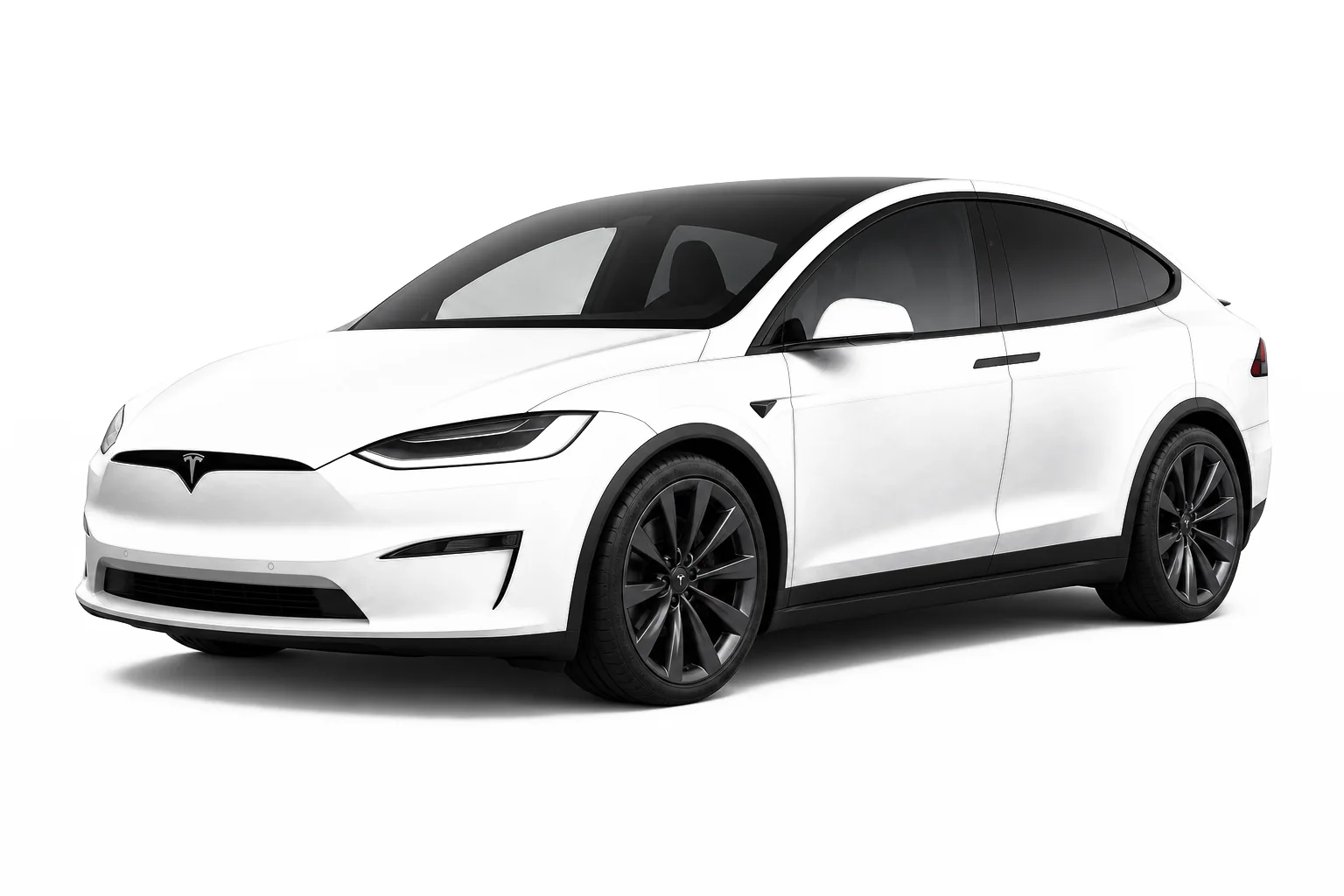
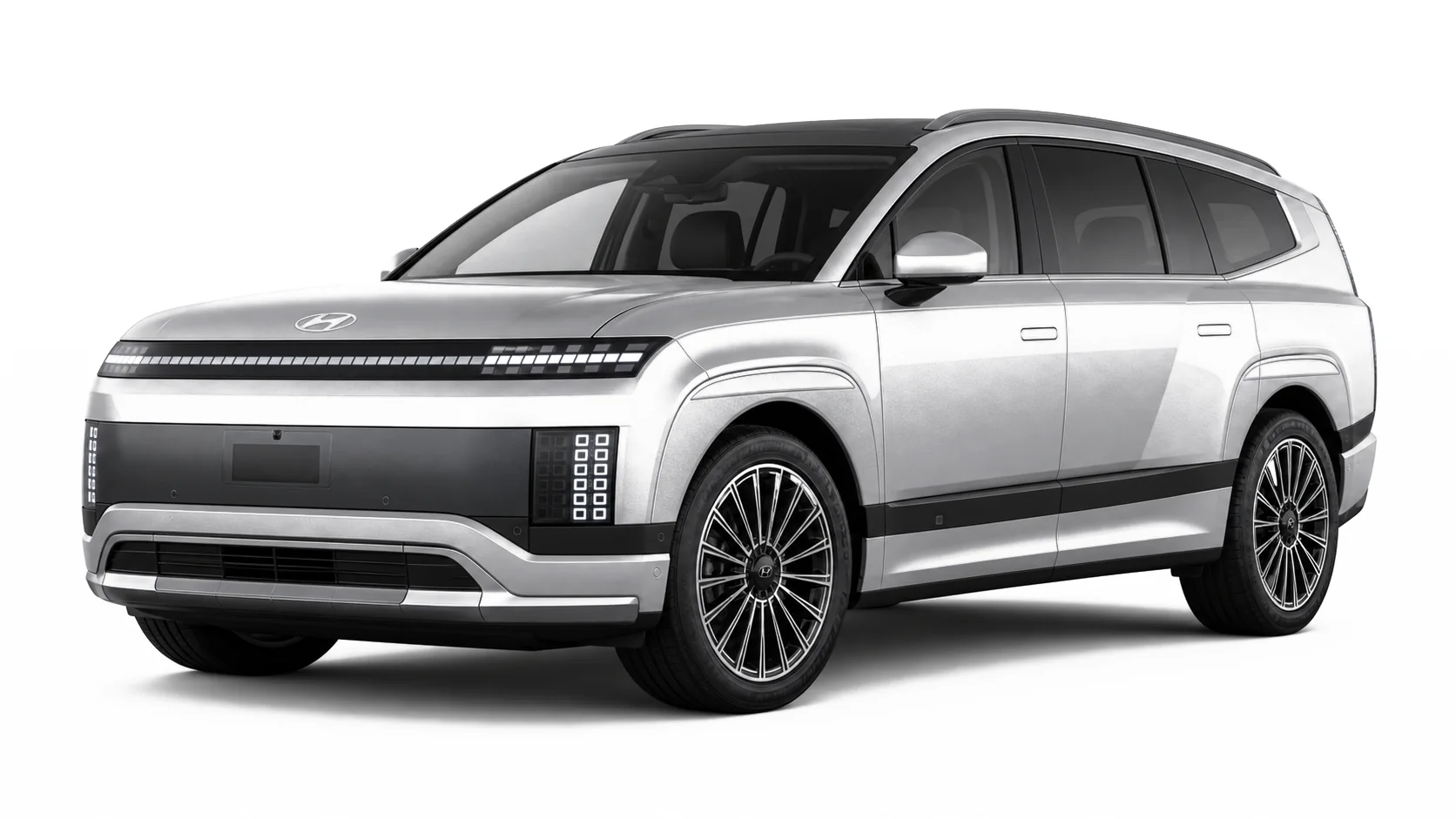
Performance, power and 0-100 km/h
2025 Tesla Model X Long Range has the quicker recorded 0-100 km/h time at 3.8 seconds, compared with 5.2 seconds for 2025 Hyundai Ioniq 9 Long Range AWD. 2025 Tesla Model X Long Range has the higher listed output at 670 hp; 2025 Hyundai Ioniq 9 Long Range AWD is rated at 380 hp, a difference of 290 hp. The torque figures follow 2025 Tesla Model X Long Range at 840 Nm and 2025 Hyundai Ioniq 9 Long Range AWD at 700 Nm. These figures describe straight-line potential only; they do not establish braking performance, ride quality, steering response or durability under repeated hard use.
Range, battery, charging and efficiency
2025 Tesla Model X Long Range carries the longer listed range at 580 km, against 570 km for 2025 Hyundai Ioniq 9 Long Range AWD. 2025 Tesla Model X Long Range has the lower recorded consumption at 17.2 kWh/100km; 2025 Hyundai Ioniq 9 Long Range AWD is listed at 19.3 kWh/100km. 2025 Hyundai Ioniq 9 Long Range AWD has the higher listed DC charging ceiling at 350 kW, compared with 250 kW. Test cycle, temperature, wheel size and charging conditions can materially affect these results, so only figures measured on the same basis should be treated as directly comparable.
Dimensions, cargo space and towing
2025 Tesla Model X Long Range provides the larger quoted cargo volume: 907 litres versus 620 litres, a difference of 287 litres. 2025 Hyundai Ioniq 9 Long Range AWD carries the higher towing rating at 2,500 kg, while 2025 Tesla Model X Long Range is listed at 2,268 kg. 2025 Hyundai Ioniq 9 Long Range AWD is 3 mm longer overall. Exterior size is not a benefit by itself: a longer body may create useful room, but cargo shape, rear-seat space and ease of parking still require a physical inspection.
Price and overall assessment
2025 Hyundai Ioniq 9 Long Range AWD has the lower listed starting price at $56,675, compared with $79,990 for 2025 Tesla Model X Long Range. 2025 Tesla Model X Long Range leads in more of the shared headline fields, but that is not a universal verdict: a buyer should weight price, performance, range and utility rather than simply count category wins. The assessment is based on the specifications shown here; it is not presented as a two-car road test.